

New Improvements to the IAGL Online Database
We have recently introduced a number of improvements to the IAGL online database designed to make searching easier, more flexible, and more useful for researchers.
These updates are especially helpful when working with historical records, where names, spellings, places, and transcriptions can vary considerably from one record to another.
More Flexible Name Searching
One of the biggest improvements is support for wildcard searching.
If you are unsure of the exact spelling of a name, you can now use an asterisk (*) to search for multiple possible endings.
For example:
Rein*
may return names beginning with Rein-, including different spellings and variants found in the database.
This can be especially useful when dealing with handwritten records, changing spellings, German/Lithuanian/Polish name forms, or inconsistent transcription.
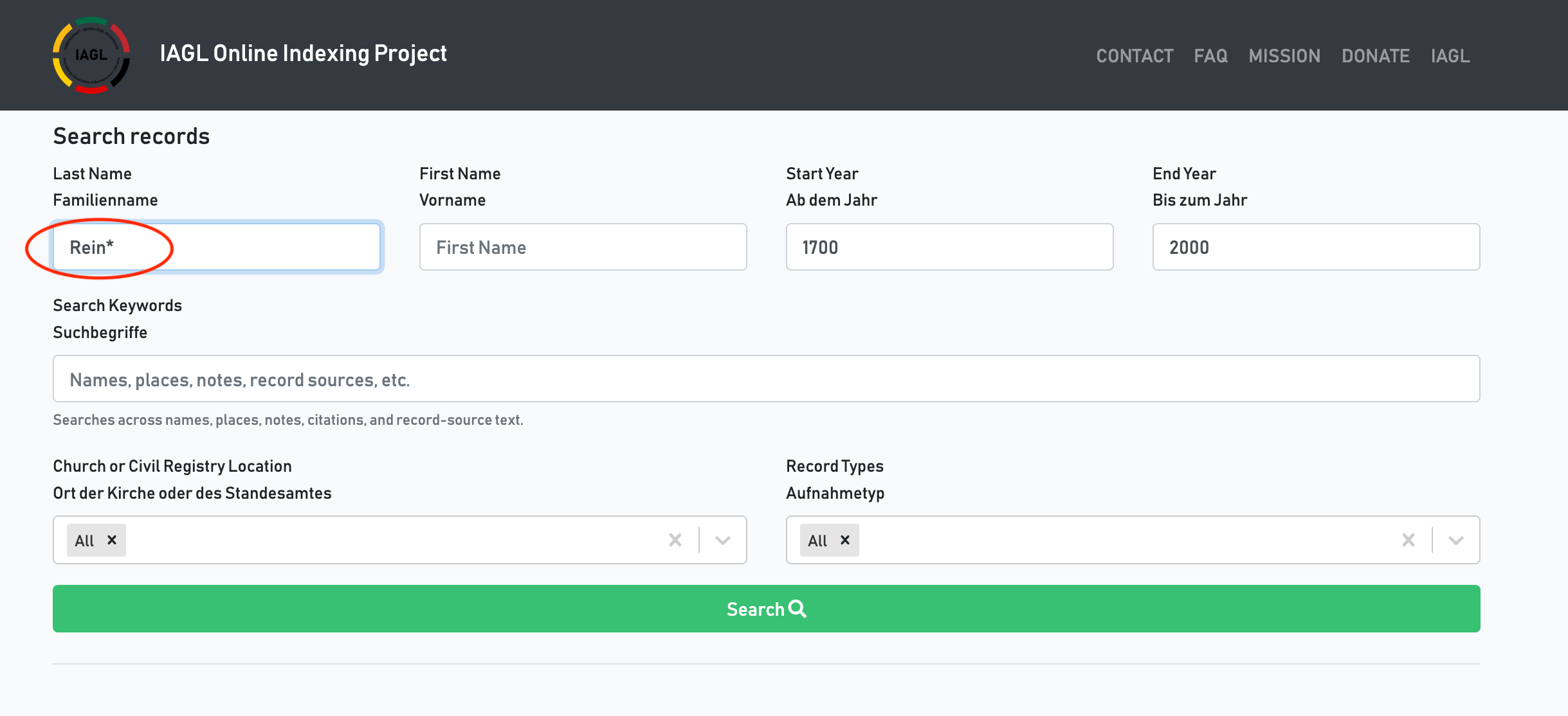
The main search form with “Rein*” entered in the Last Name field.
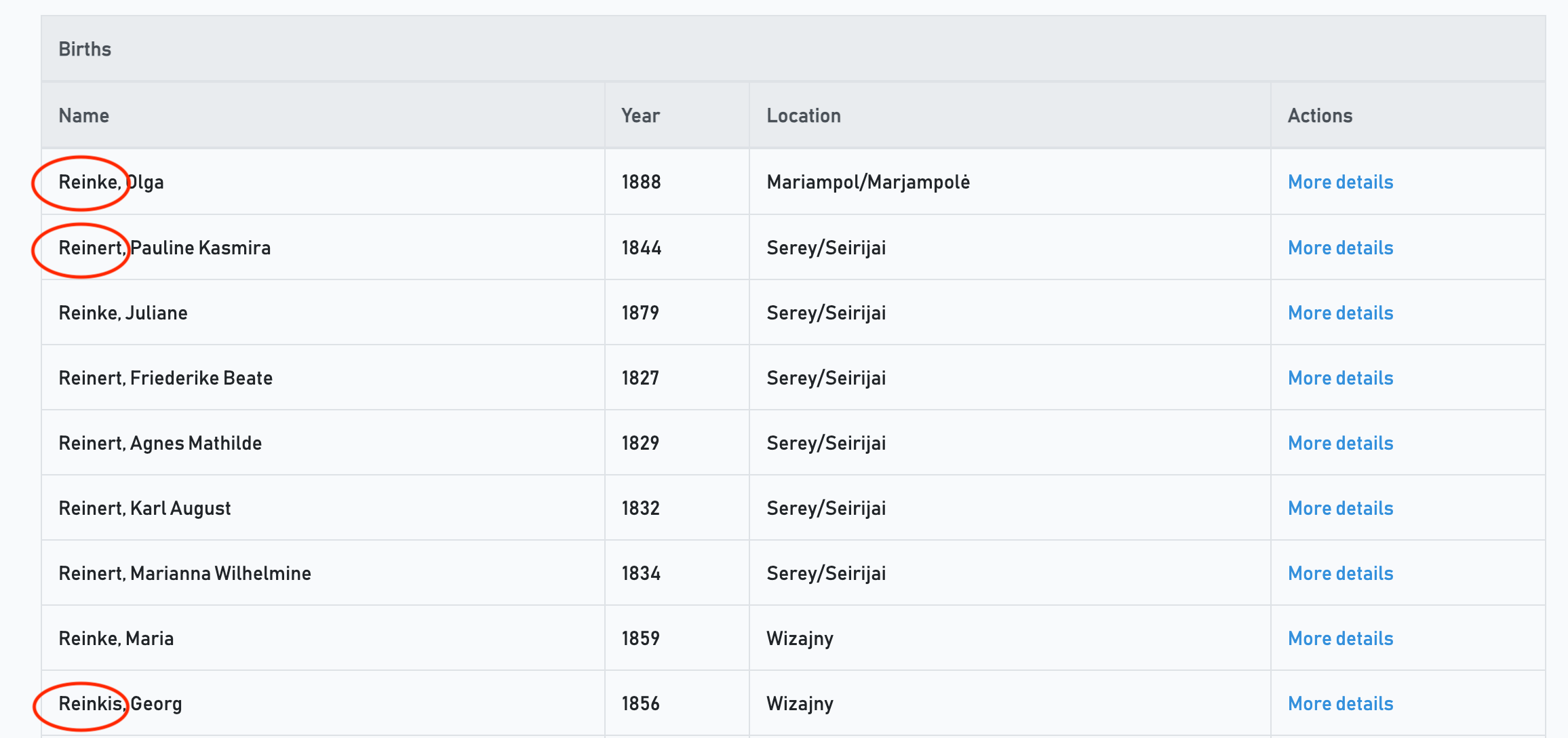
The resulting records showing several different surname spellings beginning with “Rein-”.
New “Search Keywords” Field
The database now includes a separate Search Keywords field.
This lets you search more broadly across information contained in the index, rather than limiting your search to only a first or last name.
Keyword searches can include information such as:
names
places
notes
citations
record-source information
other descriptive text contained in indexed records
For example, if you remember a village name, source reference, or term mentioned in a record, you may now be able to search for that directly.
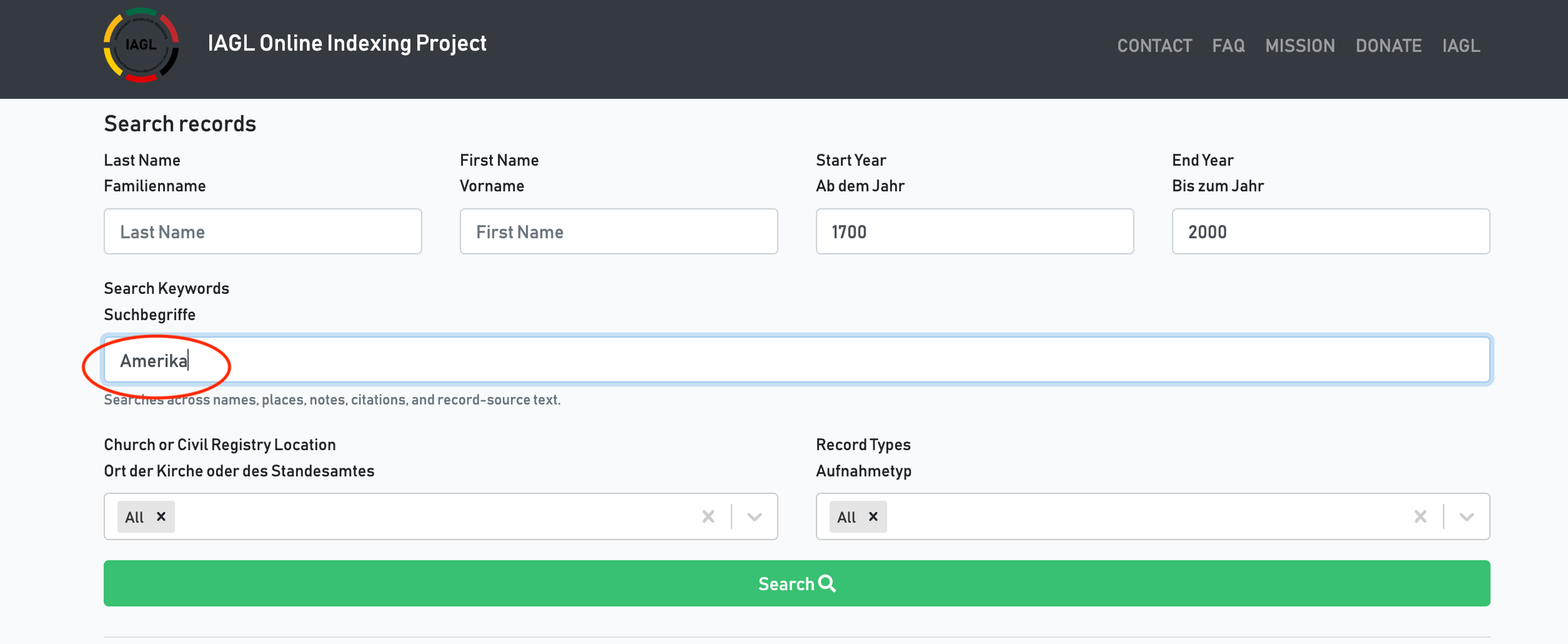
The search form with the new “Search Keywords” field highlighted, using the keyword “Amerika”
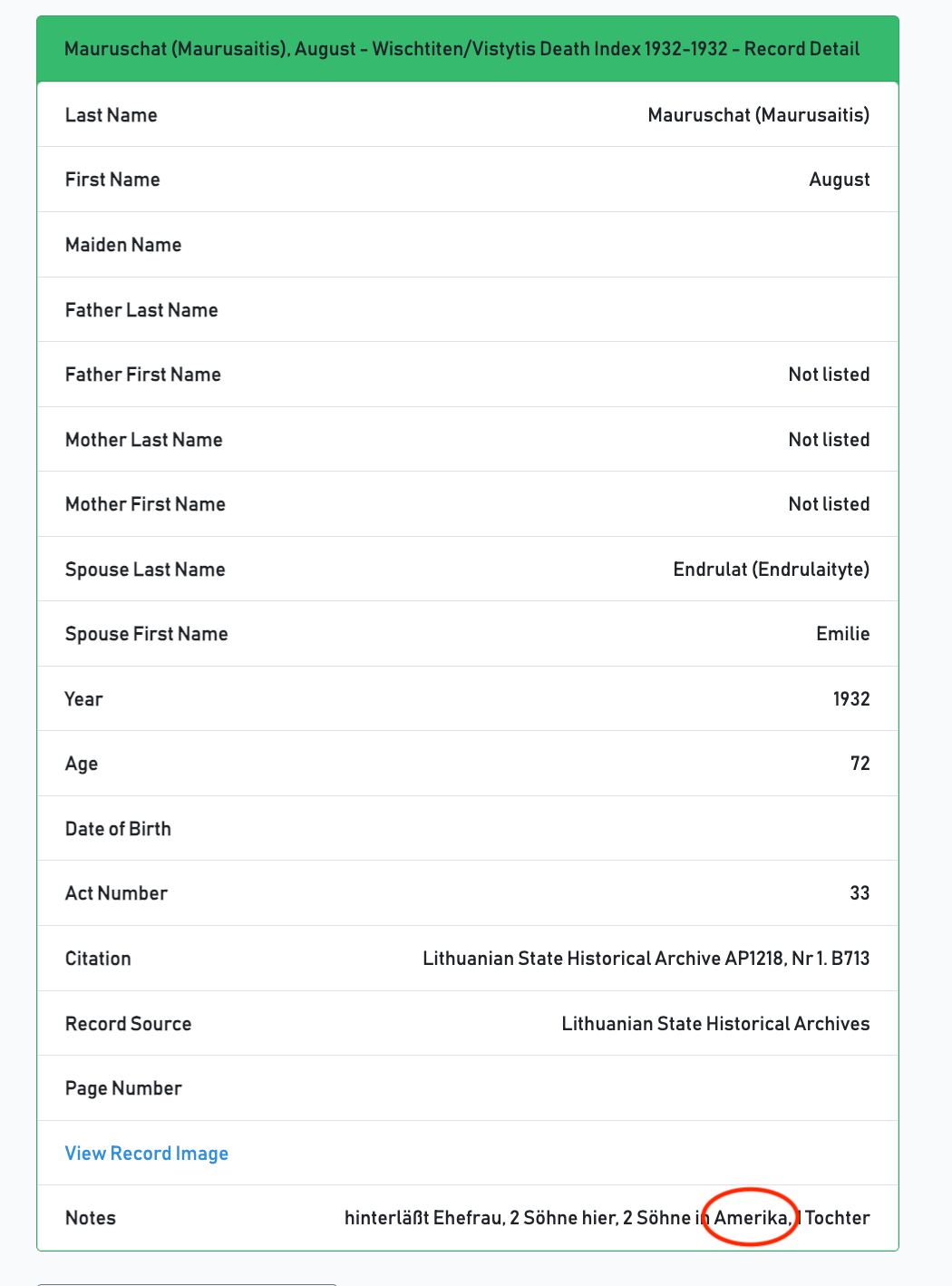
This death record mentions the word “America” under notes.
Help With Name Spelling Variations
Historical names are rarely consistent.
A surname may appear differently because of spelling changes, transcription choices, language differences, or simply the way a pastor or clerk recorded the name.
The database can now help when a name search returns no results.
If no records are found, the search page may display possible phonetic spellings already found elsewhere in the IAGL index.
For example, a search for a spelling that does not occur in the database may suggest a similar existing form such as Schmidt.
These are only suggestions. The database does not automatically change your search or assume that the names refer to the same family.
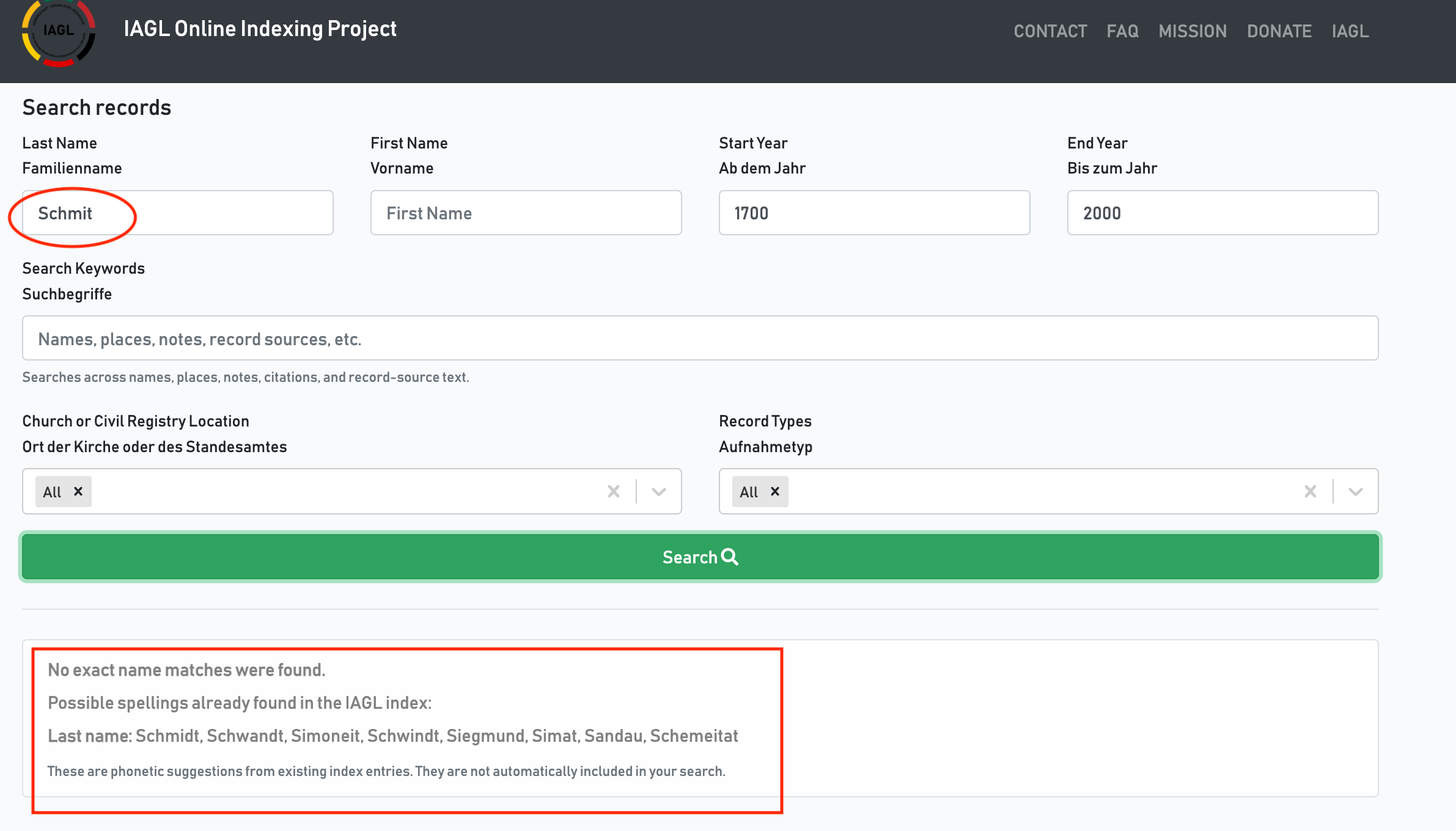
A zero-result search such as Schmit, with the “Possible spellings already found in the IAGL index” box visible.
This feature is intended to give researchers another avenue to explore while leaving the final interpretation to the researcher.
Related Records
Another important improvement is the ability to connect records that relate to the same individual.
When IAGL has linked records together, a record page may now include a Related Records section.
This can help researchers move between different events in a person’s life, such as:
birth or baptism
marriage
death
other indexed records
Rather than having to rediscover each record through a separate search, related records can be accessed directly from the record page.
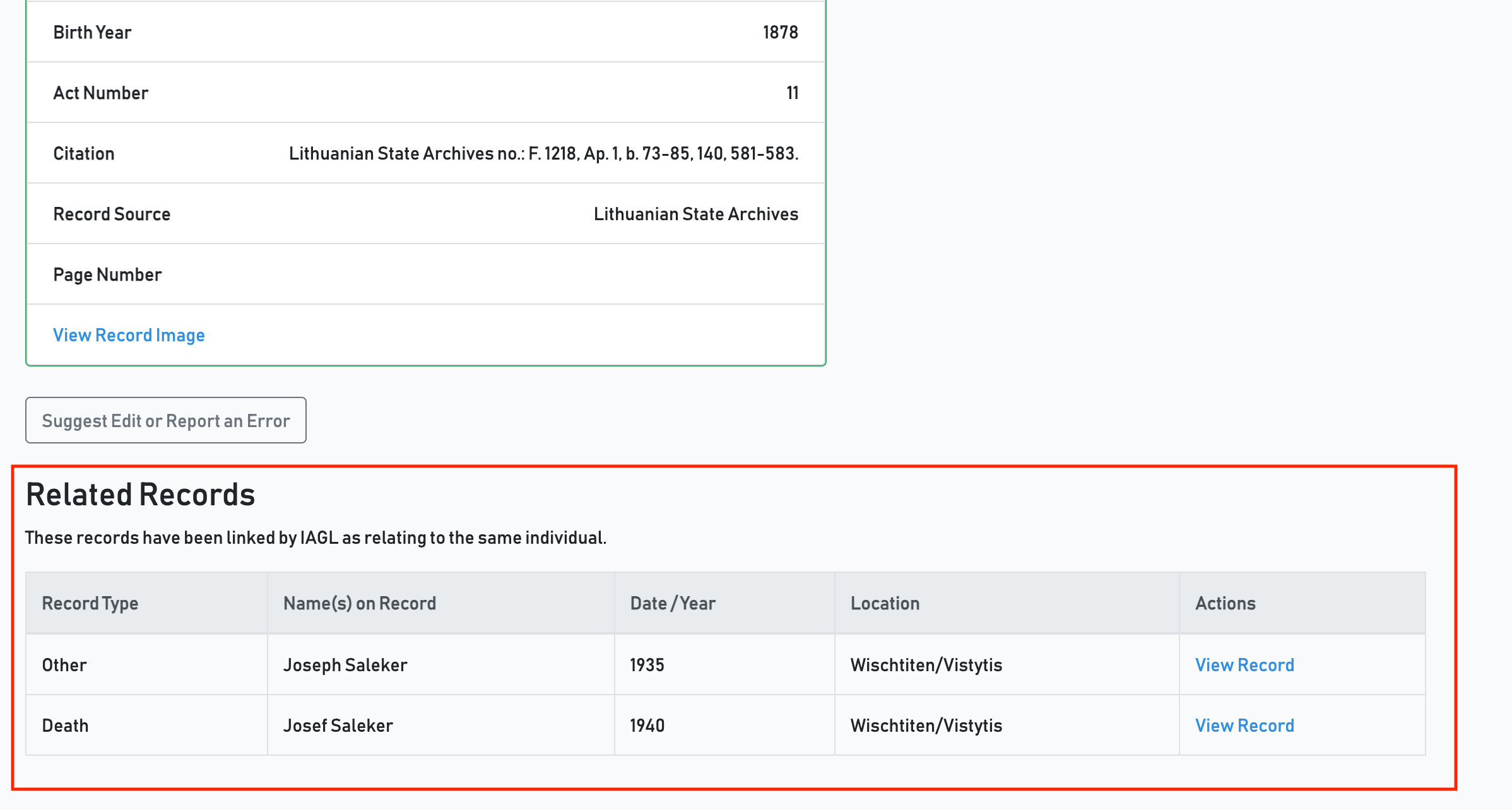
A record page for Joseph Saleker showing the “Related Records” section.
It is important to note that Related Records are currently linked manually by IAGL administrators. The system does not automatically determine that two records belong to the same person. Because this work is still being done over time, you may find records that appear to be connected but are not yet linked in the database.
The absence of a Related Records link should therefore not be taken to mean that no related record exists. Researchers should continue to search the database independently and review the underlying records themselves.
These links are intended to help researchers navigate the evidence more easily; they are not automatically generated biographies or definitive conclusions about a person’s identity.
Easier Ways to Report Corrections
Every public record page now includes a “Suggest Edit or Report an Error” option.
If you notice a transcription error, incorrect information, or something that needs clarification, you can send a message directly to the IAGL Index administrators from the record page.
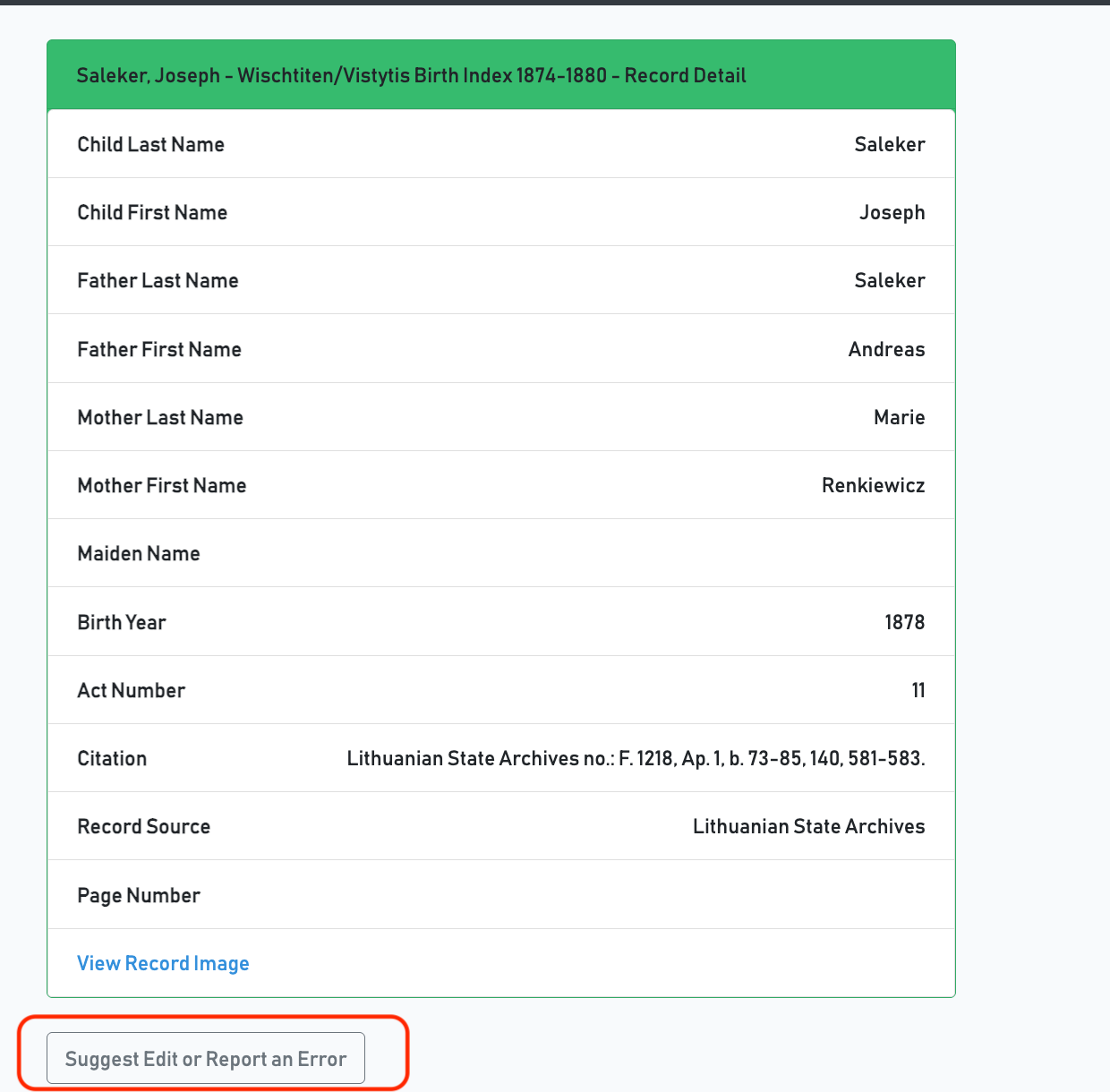
The “Suggest Edit or Report an Error” button on a record page.
The form asks for your first name, email address, and a description of the correction or issue.
The message is tied to the record you are viewing, making it much easier for us to identify and review the problem.
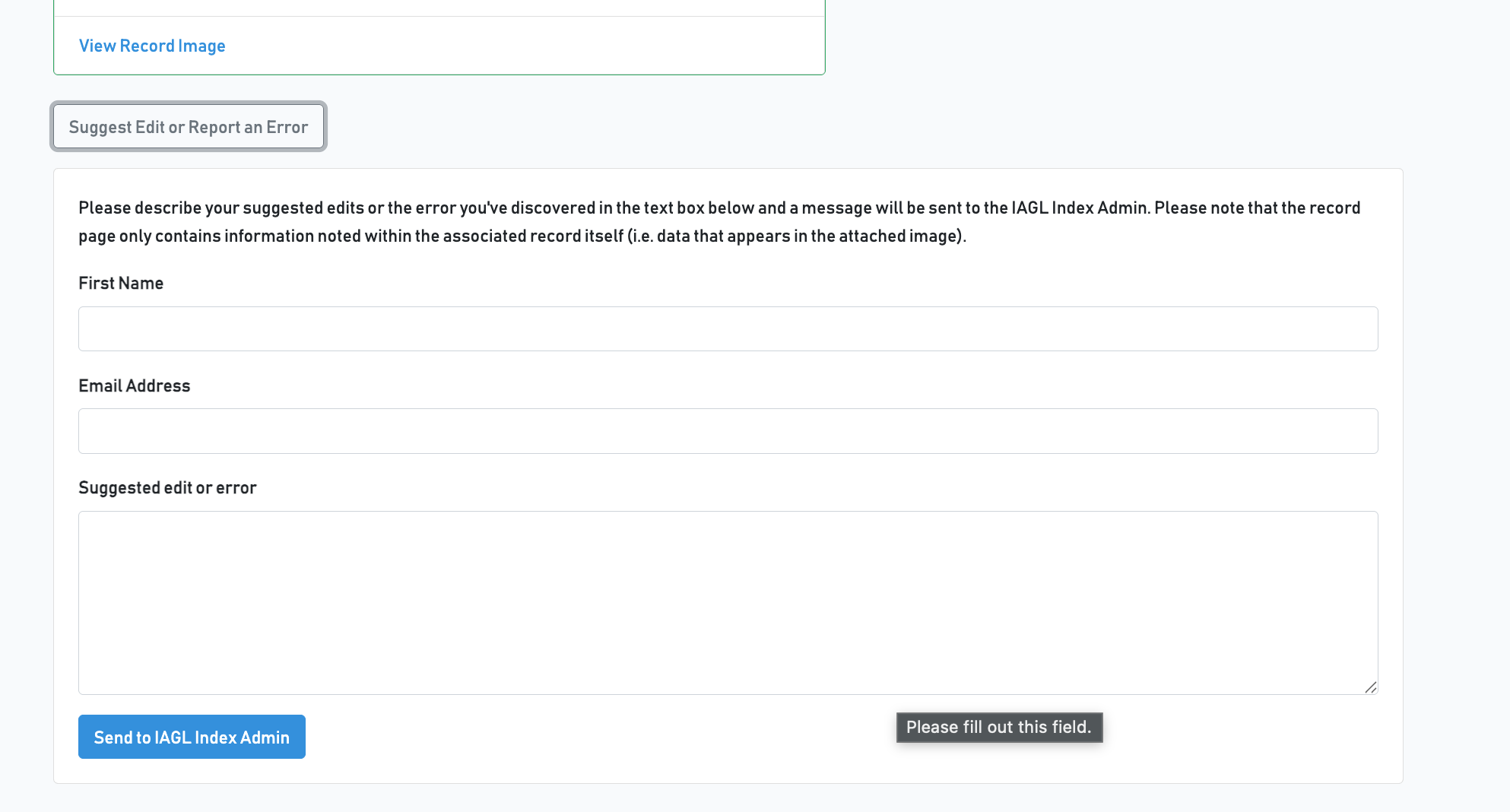
The expanded feedback form.
Built for Historical Research
These improvements were designed around some of the realities of Germans-from-Lithuania research:
names often appear in several spellings
place names may change by language or historical period
indexed information may appear in notes or source descriptions rather than in standard name fields
one person may appear in several different record types
Our goal is to make the database more flexible while still keeping the historical records themselves at the center of the research process.
We hope these new tools make it easier to discover records that may previously have been difficult to find.
If you encounter a problem or have suggestions for further improvements, please let us know.